Speaking & Consulting

Resources
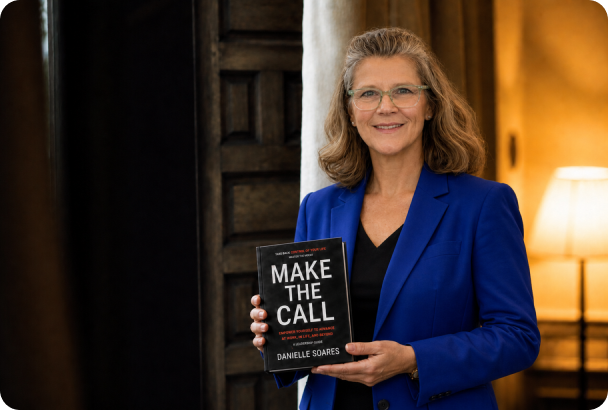
 Buy the Book
Physics has a rule that applies more than atoms. Energy that gathers quietly, unseen, does not stay quiet forever. It reaches a threshold, and then it changes state, all at once, with no warning shot in between. Water does not slowly become steam. It heats, and heats, and heats, showing almost nothing on the surface, until it crosses a line and transforms completely, in an instant.
Women have been building toward this moment for decades.
Women everywhere are waking up to the same thing at the same time, and it is extraordinary to watch.
I feel it in my clients. I feel it online. I feel it in conversations that used to happen in whispers and now happen out loud, everywhere, all at once.
For years, most of us carried our version of it alone. Something happened at work, a room where we were the only woman present, and we assumed it was ours. A personal failure. A personal flaw. We looked for what we had done wrong, because it did not occur to us that the same thing was happening, quietly, to thousands of other women.
Twenty years ago, that was me. I thought what happened to me was mine to carry, somehow caused by me, mine to fix quietly before anyone noticed. I did not know I was one data point in something much larger. I could not see the accumulation, because accumulation, by definition, does not show itself until it is finished building.
It has been building. Not for a year. Not for a news cycle. For decades, in rooms we did not know were connected to each other.
We are no longer experiencing this in isolation. We are comparing notes, out loud, in public, across industries and borders and generations. Millions of separate moments are turning out to be connected. Energy, gathering toward a threshold.
The arc that led here.
In 2013, Sheryl Sandberg published Lean In, and it became the dominant framework for a decade of career advice given to women. Its core message was that women should negotiate harder, sit at the table, and manage their own ambition more assertively. I never bought it. I did not have the kind of job, or the kind of safety net, where leaning in was even an option. Critics, including ‘bell hooks’ and Susan Faludi, said plainly what I felt without having the language for yet: it treated a structural problem as an individual one, asking women to out-negotiate a system rather than asking the system to change. The advice was never built for women like me. It was built for women who already had leverage to spend.
In January 2017, the Women’s March became the largest single-day protest in United States history, with an estimated four to five million people participating across the country and sister marches on every continent. It was not framed narrowly around one grievance. It was framed around a collective refusal, gathered in public, all at once.
Ten months later, the Me Too hashtag went viral following the Harvey Weinstein revelations, and the world learned what Tarana Burke had already known for over a decade, since she coined the phrase in 2006 working directly with survivors in Selma, Alabama. The naming did not begin the day it went viral. It began years earlier, quietly, before anyone outside that work was listening.
Individual fix, then collective visibility, then collective naming. That is the arc that led to now.
And now, look at what is actually happening.
Reproductive rights, settled for decades, are being unwound state by state. Voting access is being challenged in ways that were unthinkable a few years ago.
McKinsey and LeanIn.Org’s 2025 Women in the Workplace report, the largest study of its kind, found that corporate commitment to women’s advancement is declining, and for the first time in eleven years of tracking, women reported less interest in being promoted than men. That is not ambition disappearing. It is a response to conditions. More than 455,000 women left the U.S. workforce between January and August of 2025 alone, according to Bureau of Labor Statistics data, while men joined the labor force at roughly three times the rate women did that same year. The ground underneath women has gotten measurably harder to stand on, and the data now shows it in real time.
At the same time, a social media trend glamorizing submission and domesticity, the so-called tradwife movement, has pulled in tens of millions of followers, romanticizing exactly the roles women spent generations fighting to have the choice to leave.
None of that reads like an ending. It reads like a provocation. And provocations, throughout history, are what women have organized around.
The response, globally, is not quiet. It is loud, and it is connected, and it does not feel like an isolated reaction anymore. It feels like something that has been building and is close to a threshold.
That feeling is not imagination. Every time it has shown up before, something real happened.
What looks spontaneous almost never is.
The story most people know about the Montgomery Bus Boycott starts with Rosa Parks refusing to give up her seat in December of 1955. What most people do not know is that Jo Ann Robinson, an English professor and president of the Women’s Political Council, had been organizing for the boycott since 1949, six years earlier. She had already sent the mayor a letter warning that a boycott was coming. Her organization had built a network across every school and job site in the Black community in Montgomery. When Parks was arrested, Robinson and two others stayed up all night mimeographing 35,000 flyers. The boycott looked like it happened overnight. It did not. It happened because the infrastructure was already built and waiting for the moment that would make it visible.
Naming the problem is not a side effect. It is the mechanism.
In 1975, a Cornell instructor named Lin Farley testified before the New York City Human Rights Commission about a pattern she kept hearing from women in her class, women who had been pressured, cornered, or pushed out of jobs by men in power over them. There was no word for it yet. Farley coined the phrase sexual harassment on the spot. Once it had a name, women stopped explaining their experience as an isolated personal problem and started recognizing it as a shared one.
In 2006, a community organizer named Tarana Burke was working with young survivors of sexual violence in Selma, Alabama. One girl confided in her about abuse she had suffered, and Burke, unable to find the right words in the moment, later wished she had simply said two words back to her: me too. Burke built her organizing work around that phrase for the next eleven years, using it to help survivors, particularly young women of color, recognize they were not alone. It stayed largely unknown outside that work.
In October 2017, actress Alyssa Milano tweeted the phrase following the Harvey Weinstein revelations, asking survivors to reply “me too,” and it went viral within days, reaching millions across dozens of countries. Burke had already done the naming, more than a decade earlier, quietly, one girl at a time. The scale came after. The mechanism was already built.
There is a measurable point where movements stop losing.
Political scientist Erica Chenoweth studied 323 major resistance campaigns between 1900 and 2006 and found something specific. Nonviolent campaigns succeeded roughly twice as often as violent ones, and no campaign that reached sustained active participation from about 3.5 percent of the population failed to achieve its goal. For the United States, that threshold is a little over 11 million people.
Look at what has already happened against that number. The 2017 Women’s March drew an estimated four to five million participants in a single day, roughly 1.3 to 1.6 percent of the population, on one day alone. The Black Lives Matter protests of 2020 drew an estimated 15 to 26 million participants over the course of the summer, by some counts as high as 6 percent of the population at their peak, making them the largest protest movement in American history.
That number is not magic. It is arithmetic. Enough people, organized, holding long enough, and a system that refuses to bend on its own runs out of room to refuse. The country has already produced numbers at that scale before.
There are 172 million women in the United States. History says roughly six million of us, organized and sustained, not for one afternoon but held, is enough to move what will not move on its own.
We are already building toward it.
Backlash is often a sign the movement is working, not losing.
Writer Susan Faludi documented this pattern in 1991 in her book Backlash, showing that advances in women’s rights have historically been followed by organized efforts to reverse them. What we are watching now fits a pattern researchers have already named. Backlash is not proof that a movement has failed. It is frequently proof that a movement has become threatening enough to provoke a response.
Fast is not the same as durable.
Researcher Zeynep Tufekci studied movements that formed rapidly through social media, including Occupy Wall Street and the Gezi Park protests in Turkey, and found they could mobilize enormous numbers of people almost instantly, but often lacked the organizational depth and strategic patience that older movements, like the civil rights movement, had spent years building before their most visible moments. Tufekci called this vulnerability tactical freeze. The lesson is not to distrust momentum, but instead to build under it.
So where does the hope actually sit.
Not in the idea that a system this old changes in a season. It does not, and pretending otherwise would be its own kind of dishonesty.
It sits in the arc: individual fix to collective visibility to common naming to a moment that is building toward a threshold. Every mechanism that has ever moved a broken system is visible right now, all at once, in what women are saying and doing
And it sits in the isolation I used to carry twenty years ago, alone, at night, certain it was mine to solve. I know now there was nothing broken in me to fix. There was only a system that had not been named yet, a pattern that had not been mapped yet, a playbook that did not exist yet. It exists now. Women built it, are building it, together, out loud, comparing notes for the first time instead of carrying it alone in the dark.
If you are carrying something like that right now, I want you to hear this clearly. You are not late. You are not behind. You are early, standing exactly where every woman before you once stood, right before the ground moved.
It is going to move again - soon.
Join 12,000+ readers receiving weekly insights on leadership, confidence, communication, and personal growth.


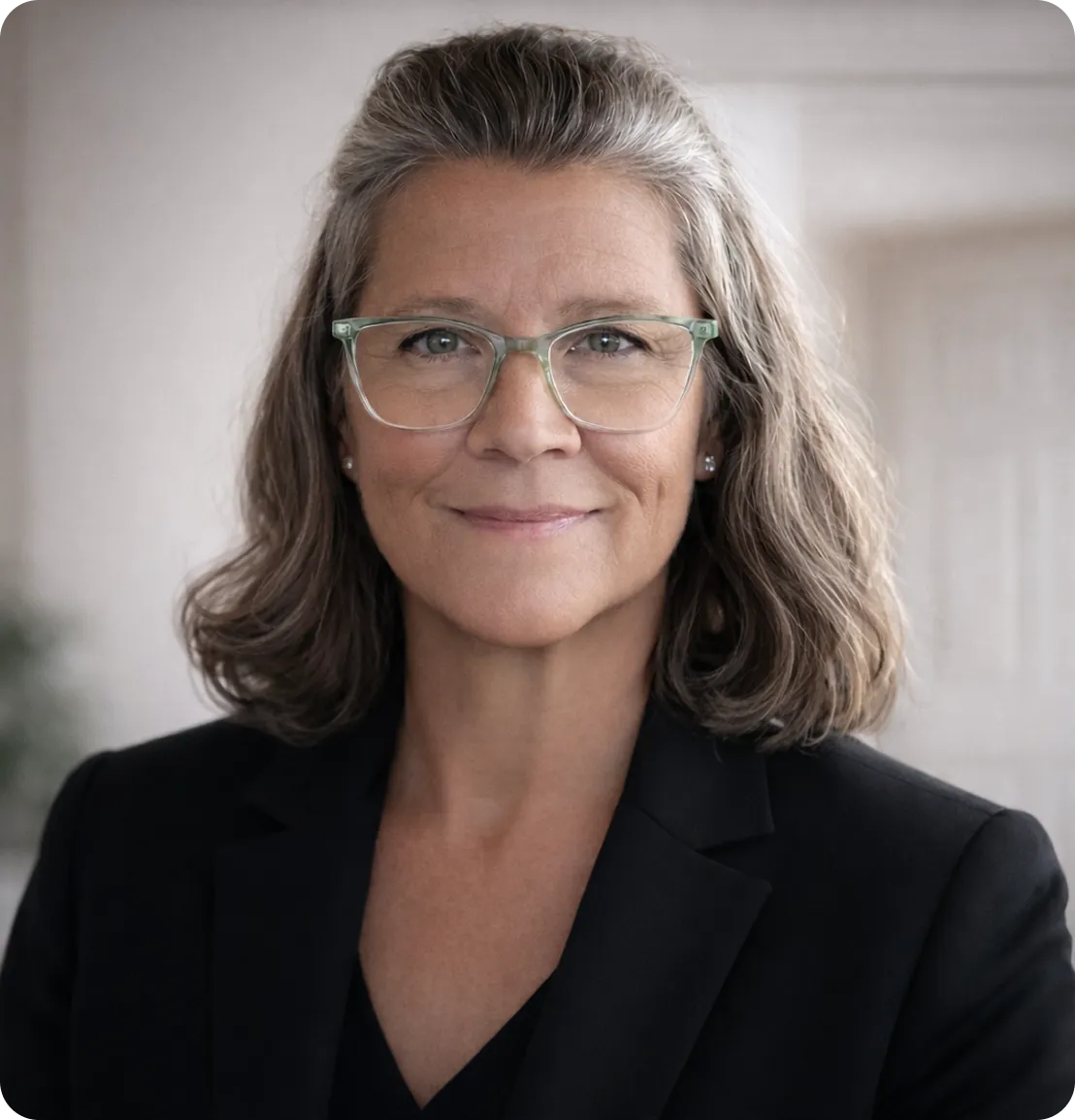
Dr. Tina Yerkes is a leadership consultant, keynote speaker, and author with 25+ years leading mission-driven organizations. A PhD scientist with executive training from Harvard and Kellogg, she has scaled nonprofits, secured seven-figure funding, and advised leaders across environmental conservation, public health, and social impact. Her work focuses on what it takes for women and mission-driven leaders to thrive — and on building the systems that hold them up.
Read Full StoryDrop your email and we'll send Chapter 1 plus the reading guide.
© 2026 TinaYerkes. All Rights Reserved.