Speaking & Consulting

Resources
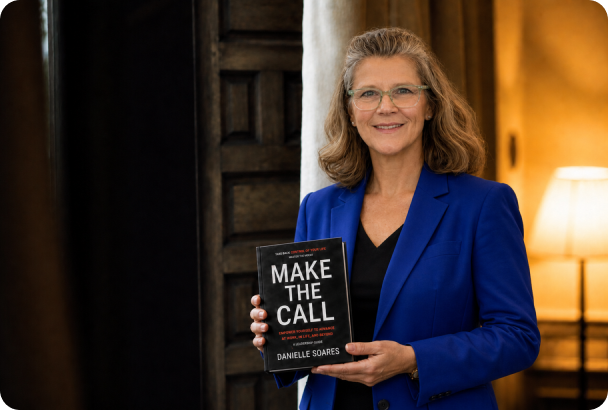
 Buy the Book
The organization was in a financial down spiral. I spent days preparing the contingency budget that would get us back on solid ground.
I presented the budget plan, the evidence, the assumptions and the trajectory. It was solid.
Silence.
My voice disappeared.
The next voice foretold the burning.
He started talking about my plan, now apparently his. His voice was an energy vortex sucking attention out of the room. Board members, women and men, turned to him and started asking questions.
He bullshits his way through the answers - boy do I mean bullshit, as in not factual at all.
They lapped it up like a golden retriever over a water bowl after chasing a ball for an hour.
I could not allow the false statements to continue; the stakes were too high.
I had to force my way back into the conversation, interrupting to make the corrections, so the organization didn’t spiral down.
Whoa. The evil eye. The match was lit, the stake secured.
He got the credit. The board called it a great plan, his great plan. I got pulled aside afterward and told to stop hoarding results, to tone down the aggression.
That was the burning. Not a meeting that went sideways for an hour. A verdict that followed me out the door and into every room after it: difficult, aggressive, hard to work with. He got a plan with his name on it. I got a reputation I would spend the next year trying to talk my way out of.
It was demoralizing in a way that is hard to explain to anyone who has not lived it. I had not just lost that meeting. I had lost my voice, not because I stopped speaking, but because nothing I said afterward was heard the same way again.
Right there, my voice not only disappeared, it was cancelled.
I stopped asking why women weren’t being heard, and I started asking what the meeting rewarded.
What the meeting rewarded that day was not the best information. It rewarded a delivery style built around the male voice, and it rewarded it automatically, without anyone in the room deciding to do it.
That is the pattern. Not “women lack confidence.” Women were never short on confidence. I walked into that room with a solid budget and complete command of the material. The pattern is a meeting structure calibrated to one voice, one register, one way of claiming space, and that calibration happened long before either of us walked into the room.
I started mapping what actually happened, the same way I used to map a spreadsheet. Not the emotions in the room. The mechanics.
He did not have better information. He had the voice the system was built to recognize as leadership. I had the same command of the material and a voice the system was not built to recognize the same way.
This is not a story about one biased board. Researchers have spent decades studying what happens when the only thing that changes is a name. In one well known study, science faculty reviewed identical application materials, the exact same résumé, the exact same qualifications, with only the applicant’s name changed to signal gender. The applicant with the male name was consistently rated as more competent and more hireable than the identical applicant with the female name, and the bias showed up equally among male and female reviewers.
That result has a real caveat, and it matters. Later research found the gap narrows considerably, and can nearly disappear, when the evaluators are experienced, the stakes are high, and the candidate’s qualifications are unambiguous, which is closer to what a room full of board members reviewing a real budget looks like than a lab study looks like.
What does not disappear is the deeper finding underneath it. Researchers studying this across multiple fields describe a cultural default, not a personal opinion, in which men are assumed to be more capable, and that default gets absorbed by everyone, including women, including people who would tell you directly that they do not believe it. Nobody in that room needed to consciously believe I was less capable. They only needed to be carrying a default they were never asked to examine.
Nobody in that room built the system that day. They inherited it, and then they ran it without question, which is its own kind of choice.
I want to be precise about what comes next, because this is the part people twist into something it is not.
No individualized strategy removes that bias from anyone’s head. Nothing a woman does in a meeting reaches into another person’s unconscious assumptions and rewrites them. That is not what strategy is for, and pretending otherwise would put the burden right back where it never belonged.
What a strategy can do is take the outcome out of the bias’s hands. The bias needs specific things to happen to win: it needs credibility to transfer live, based on who sounds most certain. It needs a correction to read as aggression instead of accuracy. It needs ownership of an idea decided informally, by whoever claims it loudest. Every one of those is a mechanism, not a mystery, and a mechanism can be interrupted on purpose, whether or not the room ever examines what it believes.
Men have had generations of informal apprenticeship inside that system, someone showing them how the room works, how to recover from an interruption, how to hold onto credit, because the room was built around people who look and sound like them. Women have not had that apprenticeship. Not because women are less capable of building a strategy, but because no one handed them the map. I was not taught the unwritten rules of that room. I was punished for not already knowing them.
That is not the same as fixing the system. The system still needs to change, and that is slower work than any one meeting. But a woman does not have to wait for the system to finish changing before she stops losing the room on Wednesday.
Here is the thought most people will not say out loud.
Every meeting has an operating system, and most rooms are running closed-source software, code that was never handed over, never explained, never opened up for anyone outside the people it was built around. People experience the results, the interruptions, the credibility transfers, the silence, and they call it culture, or chemistry, or somebody having a bad day. It is none of those things. It is code, running exactly as it was written, decades before anyone in that room was hired.
You cannot negotiate with an operating system. You cannot out-confidence it, out-prepare it, or out-perform it, because it was never evaluating performance in the first place. It was evaluating pattern match, and it was built to match one pattern.
But reading the code is not the same as knowing what to do with it.
How did successful women get to be successful? Mostly trial and error. Not because they lacked the capability to lead. They had that from day one. The trial and error was in the room itself, guessing at rules nobody wrote down. Get interrupted, try something different next time. Get talked over, try something else. Trial and error politics is exhausting, and it is slow, and most women are doing it alone, without ever being told that is what they are doing.
What successful women eventually land on is not a generic playbook. It is a way of reading the specific room, the specific pattern, and knowing exactly when and how to put their voice back into it before the room decides it was never there.
My voice was cancelled in that boardroom because I did not yet have that map. It took me years to build one. No woman should have to lose her voice first to learn how to keep it, and no women should have to endure years of trial and error.
That is the piece nobody hands women. Not confidence. Not a script written for someone else’s voice. A way to make sure it never goes silent again – her own strategic playbook!
Join 12,000+ readers receiving weekly insights on leadership, confidence, communication, and personal growth.


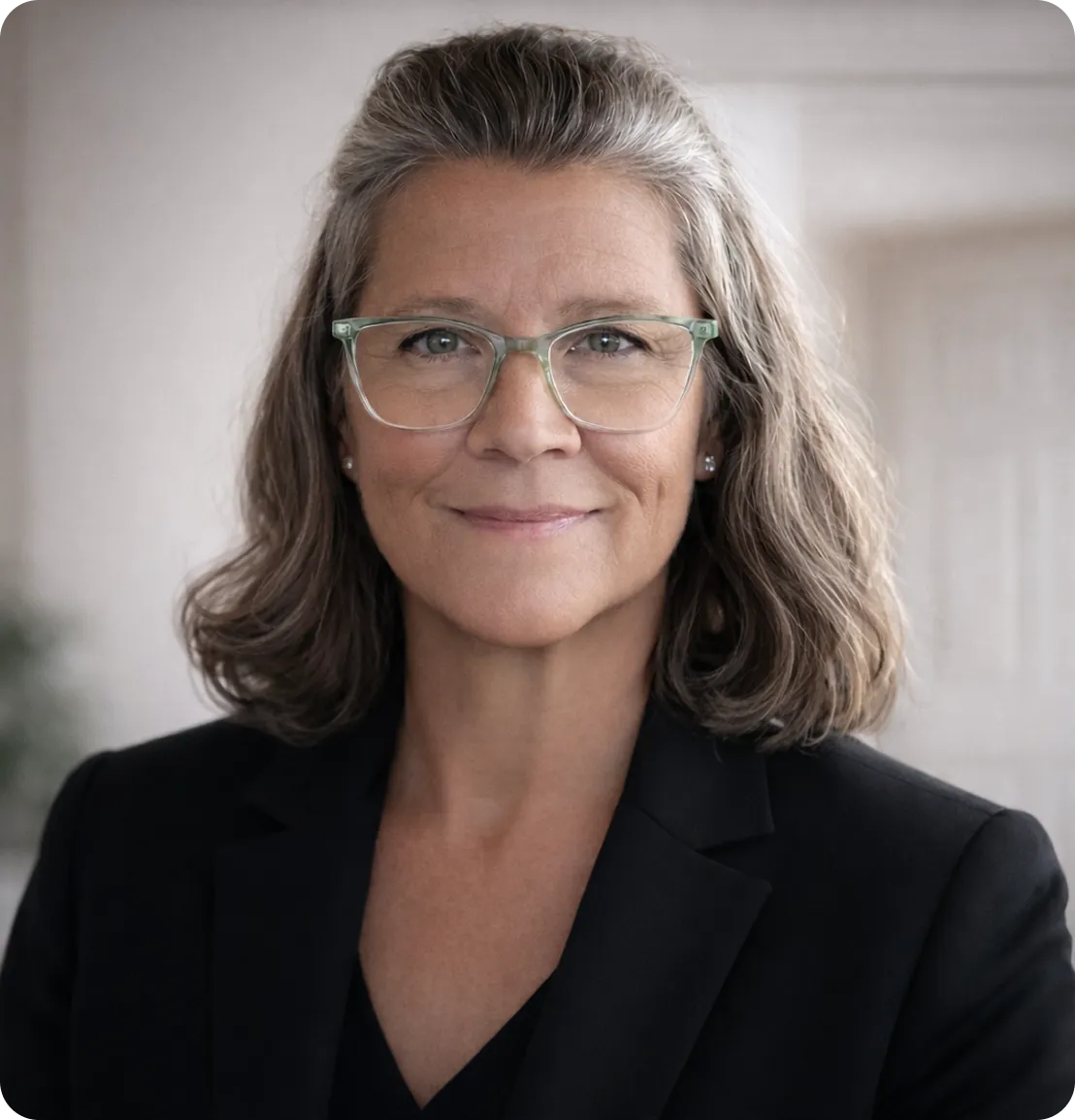
Dr. Tina Yerkes is a leadership consultant, keynote speaker, and author with 25+ years leading mission-driven organizations. A PhD scientist with executive training from Harvard and Kellogg, she has scaled nonprofits, secured seven-figure funding, and advised leaders across environmental conservation, public health, and social impact. Her work focuses on what it takes for women and mission-driven leaders to thrive — and on building the systems that hold them up.
Read Full StoryDrop your email and we'll send Chapter 1 plus the reading guide.
© 2026 TinaYerkes. All Rights Reserved.