Speaking & Consulting

Resources
 Buy the Book
I loved my job. I had trained for it for years. I was good at it.
And then I spoke up.
Not about someone else’s problem. About my own. I named the gender bias and discrimination I was experiencing, directly, calmly, the way you are supposed to. I did not yell. I did not threaten. I used the words leadership always says it wants to hear: I have a concern, and I would like to talk about it.
Within a short time, I was pushed out of the office. Told to work from home. Quietly stripped of the responsibilities that had defined my role. I watched my job - the one I loved, the one I had spent years training for - dissolve out from under me. Not because I failed at it. Because I opened my mouth about something everyone else had learned to tolerate in silence.
I could have made a different choice. I could have done what a lot of smart, capable women do: absorbed it, said nothing, kept my head down, kept the job. That would have been the safer math. It just was not who I am (and I am not pointing any fingers, because sister we got bills to pay!)
I paid a price for honesty. And I want to be precise about what that price actually was because it is not just my story. It is starting to feel like nearly every woman’s story.
A study by the consultancy VitalSmarts found that when women speak forcefully at work, their “deserved compensation” drops by $15,088; more than double what men lose for identical behavior. When observers watched a woman express the same anger as a man, her perceived competence fell by 35%, a steeper drop than his. Same words. Same tone. Different invoice.
This is not an old story, and it is not a rare one. This week, Stephanie Anthony, a program director at Michigan State University, filed suit alleging she was fired in retaliation for reporting her supervisor for racial and sexual harassment. In Michigan too, former Fox 2 anchor Taryn Asher is suing her ex-employer, alleging she was pushed out after raising concerns that she was getting fewer opportunities than her male co-anchor and that she’d noticed a pattern of female leaders quietly being replaced by men in the months before her own firing. And three weeks ago, in a Minnesota town of 500 people, a jury awarded former city clerk Ashney Helleksen more than $3 million after she was fired nine days after naming the retaliation she believed she was facing for reporting a conflict of interest. Three women, three states, three completely unrelated workplaces. Same sequence every time: speak up, get sidelined, lose the job.
This is the part that took me years to fully understand: it was never really about how I said it. Women are told constantly to soften their delivery, to sandwich the truth, to lead with a disclaimer. I have coached clients through exactly that skill. It helps, at the margins. But it does not change the underlying math, because the research is clear that the penalty tracks the speaker, not the sentence. Men are expected, sometimes required, to be direct and assertive as leaders. Women doing the identical thing are read as difficult, aggressive, not a team player. It is not a communication problem. It is a pricing problem, and the price is set before you open your mouth.
That mechanism does not care what kind of office it is in, a university, a newsroom, a city clerk’s desk. And it shows up on a much bigger scale too.
Gisèle Pelicot spent a decade as the victim of a crime she did not yet know the full extent of. When it came time to prosecute the men responsible, she was offered the option of a closed hearing: privacy, protection from public scrutiny. She refused it. She insisted the trial be public, specifically so other survivors could see it happen and stop carrying shame that was never theirs to carry. Her words became the line that traveled around the world: shame must change sides. Saying the true thing publicly, in a courtroom, cost her privacy, safety, and years of her life relitigated in front of strangers. She did it anyway, and she did it so the next woman would not have to pay quite as much.
Watch the Epstein survivors and you see the same tax charged in a different currency. These are women who have already told the truth, repeatedly, on the record, at real personal cost. A year after the files first started surfacing, survivors are still fighting for them. This summer, a U.S. senator held up a confirmation vote until the Deputy Attorney General agreed to personally sit down with survivors. Days later, the family of one survivor was still publicly pushing back on a former White House lawyer’s claim that her account “lacked inherent credibility.” Believing a woman once is not the same as extending her credibility permanently. She must keep re-earning it, appearance by appearance, disclosure by disclosure, a year on and still counting.
A university office, a courtroom, and a Congressional hearing. Different rooms, same bill. It was never honesty that cost any of us. It is who was doing the telling.
The same directness that reads as leadership from a man reads as a threat from a woman. The same testimony that would close a case cleanly for one kind of witness gets picked apart for another. The people who built this system never pictured a woman as the one speaking; they never had to imagine a woman on the other side of the sentence.
None of us were ever the problem. Not me, not Gisèle Pelicot, not the women who stood outside the Capitol demanding their own files. What we pointed out was wrong with the system, not with us. Somewhere along the way, that got turned around. And, there is no sign it is slowing down or coarse correcting either.
I lost a job I loved because I told the truth about what was happening to me. I’m telling you because I know I’m not the only one reading this who has a version of it, and most of us were told, one way or another, that if we’d just delivered it differently, softer, smaller, later, or just sucked it up, it wouldn’t have cost us anything. That is not true. The cost was never about delivery. It was about who was speaking.
No woman should have to choose between telling the truth and keeping her paycheck. That is the actual problem. Not that some of us speak up and some of us do not, but that speaking up has cost. Stephanie Anthony should not have had to file a lawsuit to be believed. Taryn Asher should not have had to sue to be treated equally. Ashney Helleksen should not have needed a jury to say what should have been obvious the day she was fired. None of us should have had to choose.
That is what must change - stop silencing women!
Join 12,000+ readers receiving weekly insights on leadership, confidence, communication, and personal growth.


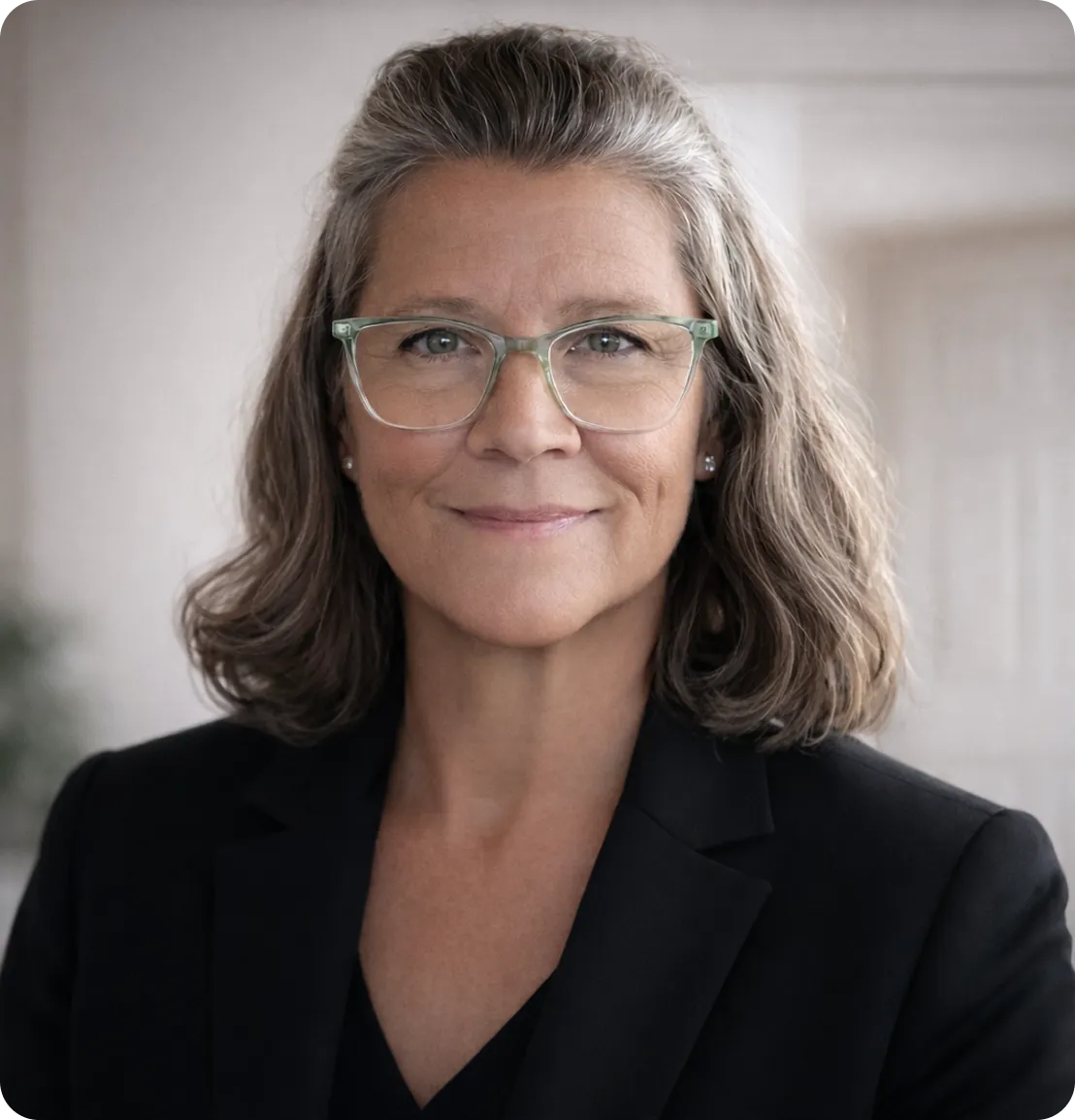
Dr. Tina Yerkes is a leadership consultant, keynote speaker, and author with 25+ years leading mission-driven organizations. A PhD scientist with executive training from Harvard and Kellogg, she has scaled nonprofits, secured seven-figure funding, and advised leaders across environmental conservation, public health, and social impact. Her work focuses on what it takes for women and mission-driven leaders to thrive — and on building the systems that hold them up.
Read Full StoryDrop your email and we'll send Chapter 1 plus the reading guide.
© 2026 TinaYerkes. All Rights Reserved.