Speaking & Consulting

Resources
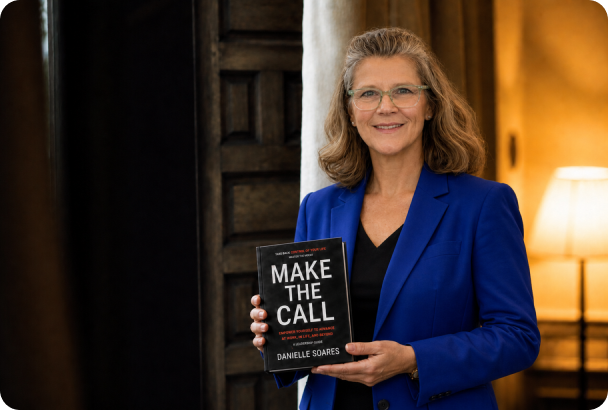
 Buy the Book
Nobody fired her. She fired the system
Picture a woman who is not fired.
She does not receive a severance. There is no restructuring memo with her name quietly missing from the new org chart. She sends one email, gives two weeks, and doesn’t let the door hit her in the ass on the way out. She wasn’t eliminated, she eliminated the workplace nonsense, and at a risk.
This is not the story of who gets pushed out. This is the story of who walks, on her own timeline, by her own decision, and what that choice actually costs the organization she leaves behind, and what it hands to her.
In 2022, McKinsey and LeanIn.Org named this pattern the Great Breakup, after data showed women leaders switching jobs, not leaving, at the highest rate ever recorded, at a rate higher than men in leadership. They were not chasing bigger paychecks. They wanted flexibility, genuine investment in employee well-being, and a real commitment to equity, and they left when they did not get it. She does not leave because she cannot handle the job. She leaves because she has done the math on what staying costs her, and the number stopped making sense.
Unfortunately, organizations are not considering this a loss– but they should. When a woman leader leaves on her own terms, the company does not just lose one name off an org chart. It loses ground on a number it was already struggling to hold. A voluntary departure at the senior level does not get replaced from an equally deep bench, since the bench itself has never been deep compounding the broken rung syndrome. It further narrows a pool that was already very thin due to systemic biases (last week’s theme!). Investment research firm MSCI, studying thousands of public companies, found that firms with strong female leadership generated a return on equity of just over ten percent annually, compared with under eight percent for firms without it. That is not proof that women alone drive performance. It is evidence that losing them is not a neutral event on a spreadsheet. It is a cost, and most organizations do not book it as one, much less recognize it at all!
Now look at what she gains. Women started twenty nine percent of new businesses in the United States in 2019. By 2024, that share had climbed to forty nine percent, according to Gusto’s 2025 New Business Formation report, nearly half of every new business launched that year. Money was rarely the headline reason women gave. Almost three quarters of the women who started businesses in 2024 said they wanted control over their own schedule. Seven in ten said they wanted to be their own boss. Separately, Deloitte’s 2025 Women at Work survey found that only five percent of women expected to remain with their current employer for more than five years. The exit is not an anomaly and is fast becoming a default plan.
The dollar value behind that shift is not small. Women owned businesses generated 3.3 trillion dollars in revenue in 2024, according to the Wells Fargo Impact of Women Owned Businesses report (a commissioned study, not Census data; other sources put the figure closer to 2.7 trillion depending on methodology), and now account for thirty nine percent of all enterprises in the United States, employing 12.9 million people. Between 2019 and 2024, their revenue grew by fifty four percent, a rate faster than the seventeen percent growth in the number of women owned firms over the same period. That gap between the two figures matters. It means the shift is not only more women opening more small operations. The businesses that already existed are becoming meaningfully larger.
The kind of business she opens is also changing. For years, more than half of women owned businesses clustered inside four industries, professional and technical services, administrative and support services, health care and social assistance, and personal care. That concentration has not disappeared, but the edges of it are moving. Yelp’s 2025 She-conomy report(Yelp’s own platform listings, not a comprehensive economic survey ,directionally useful but not the full market) found that women owned home service businesses, the kind that fix, build, and maintain rather than advise or care for, topped 15,000 new openings in 2024, the leading category of women owned business openings for the second year running. Lawn service businesses owned by women grew 31%, electrical businesses grew 15%, landscaping grew13%, and handyperson services 11%. These are trades that spent decades keeping women out almost entirely. When she leaves to build something of her own, she is opening doors to the kinds of businesses that were not (are not!) kindly holding the doors open for women. She’s doing it anyway!
The lending story looks the same. According to the Federal Reserve’s Small Business Credit Survey, women owned businesses that applied for financing from large banks were approved at a rate of roughly 52%, compared with roughly 68% for men owned businesses. Even inside federal programs built to close that exact gap, the pattern holds. In fiscal year 2024, about 15,500SBA 7(a) and 504 loans went to majority women owned businesses, compared with about 52,700 for majority men owned businesses, and women owned businesses received roughly 21% of total SBA 7(a) loan dollars.
In what at first glance appears to be contradictory data -Biz2Credit, a small business lending platform, found women owned businesses approved at a rate of 36% in 2024, compared with 29% for men owned businesses. Unfortunately, looking closer, that higher Biz2Credit approval rate is not the good news. Biz2Credit is not a bank and not an SBA lender, it is a fintech platform built around fast, short term, alternative financing, the kind approved with fewer guarantees behind it and a higher cost attached. Biz2Credit’s own data shows the average credit score among its female applicants was 588, compared with 618 for male applicants, and women were markedly more likely to apply for short term or instant funding rather than traditional term loans because that is all they could get. Women are not actually getting funded more easily. They are getting turned away by the cheaper, federally backed, traditional channels first, and then showing up at the alternative lenders willing to say yes at a higher price. A higher approval rate at that second stop is not evidence of progress. It is evidence of where women land after the safer door already closed.
Wholly women founded companies received only around 1-2% of United States venture capital dollars in 2024, according to PitchBook, even as research from Boston Consulting Group found that women founded companies generate 0.78c of revenue for every dollar invested in them, compared with 0.31cfor male founded companies. The bias holds even inside identical categories of work. Within professional services alone, 9% of male owned businesses surveyed by Gusto received private capital investment to get started, compared with 2%of female owned businesses doing the same kind of work. She is not trading a hard environment for an easy one.
This is worth saying out loud: being a founder is not a safe or soft landing. She is underfunded by venture capital, underfunded by traditional bank lending, and underfunded by the federal program built as the safety net underneath both. She is trading one uphill climb, inside a system that at least paid her a salary, for another uphill climb, inside a system that will not even reliably fund her. Any honest look at that decision has to ask why a woman would choose it.
The answer is not complicated, and it is not flattering to the organizations she leaves. She takes the funding gap, the harder odds, the years of building something from nothing, because it is still less miserable than staying. That is the real data point underneath the Great Breakup and underneath the entrepreneurship boom. Women are not choosing risk because risk is appealing. They are choosing it because the alternative, the one that looked safer on paper, was already the greater risk to who they were becoming.
She did not leave. She escaped. Escaping does not promise her a fair landing. The venture market she runs toward is still stacked against her, same as the promotion ladder she ran from. But on the other side of that door, the unfairness is one she gets to negotiate on her own terms, instead of one she keeps quietly absorbing on someone else’s. The room she left does not get safer for the next woman in it until the people who run it decide that losing her was the expensive choice, not the free one.
Join 12,000+ readers receiving weekly insights on leadership, confidence, communication, and personal growth.


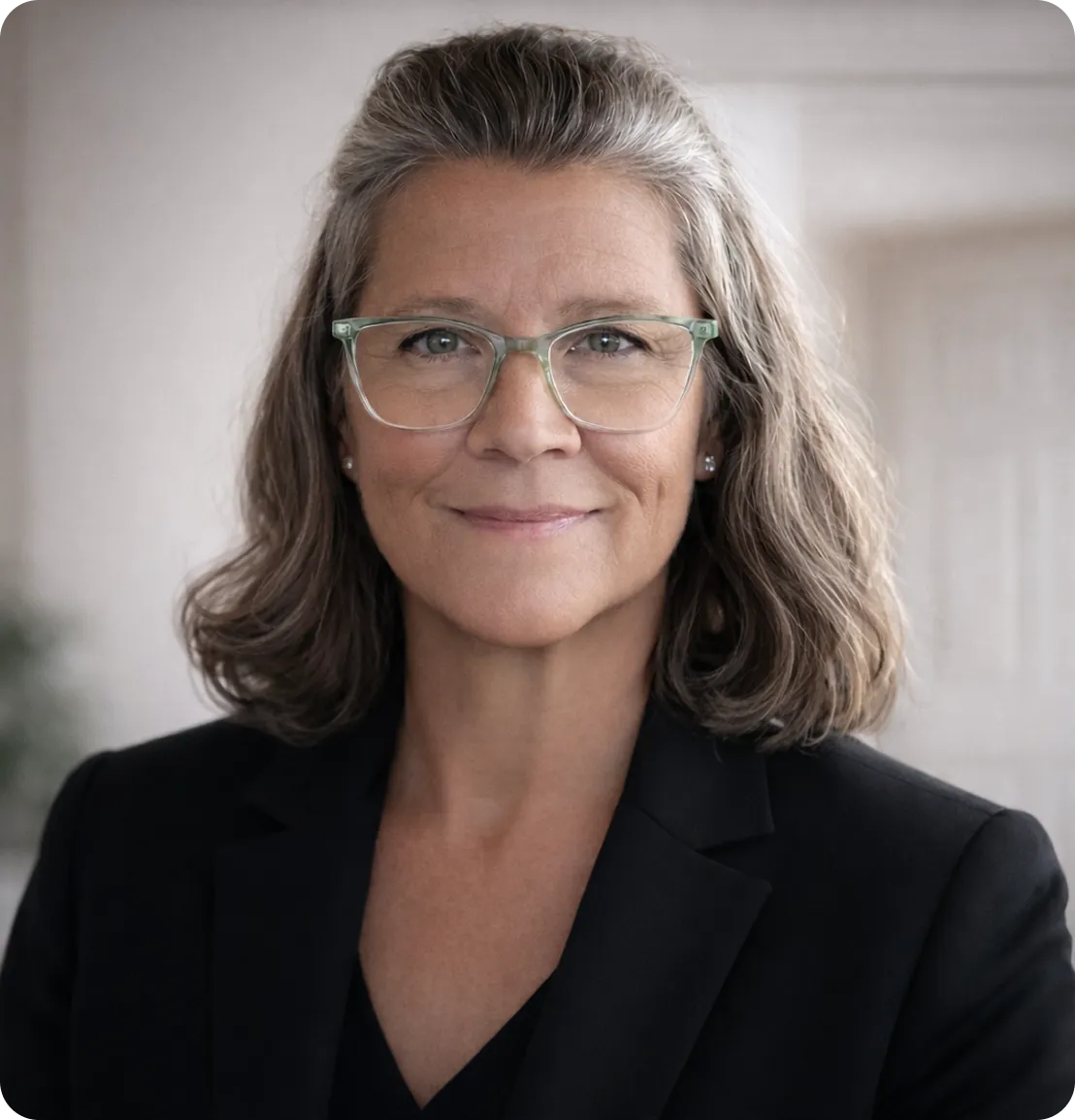
Dr. Tina Yerkes is a leadership consultant, keynote speaker, and author with 25+ years leading mission-driven organizations. A PhD scientist with executive training from Harvard and Kellogg, she has scaled nonprofits, secured seven-figure funding, and advised leaders across environmental conservation, public health, and social impact. Her work focuses on what it takes for women and mission-driven leaders to thrive — and on building the systems that hold them up.
Read Full StoryDrop your email and we'll send Chapter 1 plus the reading guide.
© 2026 TinaYerkes. All Rights Reserved.