Speaking & Consulting

Resources
 Buy the Book
The years I spent believing I was the problem.
The hardest sentence for a woman to believe at work is also the truest one. It is not you. Early in my career I believed the opposite, and everything around me was set up to make me believe it. The advice I received contradicted itself at every turn. Be confident, but not arrogant. Speak up, but do not interrupt. Be assertive but be likable. Be ambitious, but do not look like you want it too badly. Everywoman knows the list, and no one can follow any of it. Catalyst documented this trap in its 2007 research on women in leadership, finding that women were seen as too soft or too tough and never just right. I did not have that research then. What I had was a theory, and the theory was me.
I also had no way to test that theory. There were no other women in peer roles to compare notes with, and without a comparison you are left with exactly one explanation, which is yourself. Isolation works that way. It never announces itself. It simply leaves you alone with the wrong answer. It took years, but eventually I started talking with other women across organizations and comparing notes. We had heard the same contradictions, been handed the same advice, experienced the same bias, and each of us had quietly concluded that she was the one failing. It was not me. It had never been me.
Then came the insult added to the injury. I worked with a coach, a woman, who told me to act more like a man if I wanted to get ahead. I did not brush off her advice. I tried it, and it did not work either. I have thought a great deal about how absurd that moment was. A woman sought guidance, and the guidance was to become someone else, so that a system built without her in mind would tolerate her.
I no longer think any of this is an accident. Impossible rules, a penalty for breaking them, and no one to compare notes with are what a system looks like when it is designed to shut women down, and the research shows the design at work. Hannah Riley Bowles, Linda Babcock, and Lei Lai found in 2007 that evaluators penalized women more than men for asking to negotiate their pay. Laurie Rudman found in 1998 that women who promote themselves are liked less than men who behave identically. And McKinsey and Lean In reported in 2025 that four in ten entry-level women had gone two years without a promotion, a stretch assignment, or an opportunity to join leadership or career training, compared with three in ten entry-level men. Ask and you pay, promote yourself and you pay, and the opportunities go elsewhere.
So women learn to keep quiet, and they keep quiet about the help they get too. In my advisory work, I see that men name their coaches and mentors freely, and some of them brag about it, while women tend to hide theirs for fear of judgement. None of the studies above asked about coaches, but it is easy to see why a woman would keep one to herself. It is also how the design finishes its work. Women tend to hide that they have a coach because they expect to be judged for it. They assume an employer will start wondering what is wrong with them, while a man mentions his coach like a credential and no one blinks. But a coach is exactly what ends the belief that it is you.
The help is worth having. In 2006, Gartner and Capital Analytics analyzed five years of data on more than 1,000 employees at Sun Microsystems. Employees in the company’s mentoring program moved up a salary grade at five times the rate of employees outside it, with 25% of the mentored group moving up compared with 5%of everyone else, and they were promoted five times as often. That study covered all employees, not women alone, and it counts salary grades rather than individual raises. For women specifically, the strongest evidence is a randomized trial. The American Economic Association randomly assigned applicants to a mentoring program for junior women economists, and Donna Ginther, Janet Currie, Francine Blau, and Rachel Croson reported in 2020 that the mentored women were more likely to stay in academia and more likely to have earned tenure at a top-ranked department.
25+ years of watching these patterns repeat across positions, industries, and continents is what built my work: Equity by Design™ for organizations, the Leadership Blueprint™ for the individual female leader, and my book, Change the System, Not the Women. It is also why my mentoring starts where most coaching does not. I first make it clear – it’s not you! Then we decode her profile, map her landscape, and name the pattern she is standing in so solid strategy can be built.
The people who hold the power own the rules women work under, and redesigning them is their responsibility. That is the argument of my book. But people do not give up power because it is the right thing to do. They have to be held accountable, and that begins when women stop facing all of this alone and start naming it together. Isolation is how power controls women. It kept me believing for years that the problem was me, and it keeps women from getting help. Comparing notes is how I started taking back control, and it happens again each time a woman says out loud what was done to her, that she has a coach, or that she is demanding equity. Power depends on women staying silent and alone. It is not you, and once enough of us say so out loud, no one in charge can keep acting as though women are the problem.
Join 12,000+ readers receiving weekly insights on leadership, confidence, communication, and personal growth.


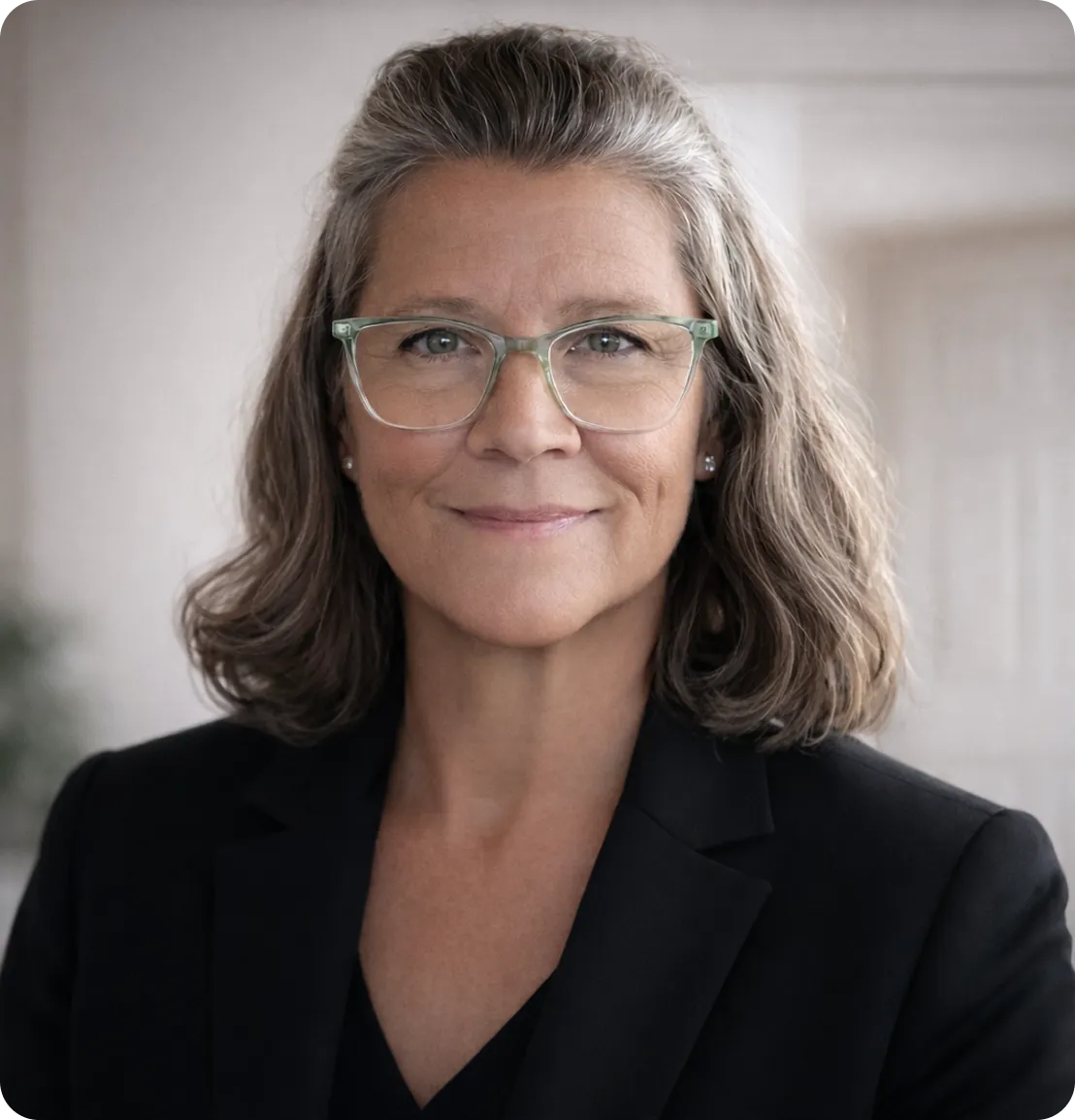
Dr. Tina Yerkes is a leadership consultant, keynote speaker, and author with 25+ years leading mission-driven organizations. A PhD scientist with executive training from Harvard and Kellogg, she has scaled nonprofits, secured seven-figure funding, and advised leaders across environmental conservation, public health, and social impact. Her work focuses on what it takes for women and mission-driven leaders to thrive — and on building the systems that hold them up.
Read Full StoryDrop your email and we'll send Chapter 1 plus the reading guide.
© 2026 TinaYerkes. All Rights Reserved.