Speaking & Consulting

Resources
 Buy the Book
The company was investing in me. I was being developed for an advanced position, and they were paying for a coach to get me there. I suggested a few names. They picked someone else: a woman who had built her career in male dominated fields. On paper, this looked promising. A woman who understood what it took to lead in rooms built for men. Someone who would finally give me the real playbook.
She did not.
She started by collecting anonymous feedback about me. The kind of feedback that tells you nothing except that someone somewhere was uncomfortable. Vague. Unattributed. Out of context, full of venom. Useless for anyone trying to actually grow. Then she went looking for my “issues,” which told me she had already decided I had some before she ever sat down with me.
Here is what she came back with. I needed to adapt more subservient behavior toward the men in my organization. I needed to play by their rules.
I was sick. Was there truth buried in there somewhere? Yes, I did need more situational awareness. That part was fair. But that was not what she led with, and it was not the center of her advice. The center of her advice was this: shrink around your strengths instead of standing inside them. Manage the fact that you intimidate them. Manage the fact that you are smart. Manage the fact that you are successful. Make yourself smaller so the men around you feel bigger.
I pushed back hard. It did not feel right, and it felt even worse coming from a woman who had presumably lived some version of this herself. I told her plainly that I thought she was full of it.
Her response: if you want to advance in this organization, this is what you will have to do.
Was she right?
Yes and no.
Yes, because about a year later I was run out. The men in that organization could not imagine a woman actually leading. No amount of situational awareness was going to fix that.
No, because everything about that advice was wrong. Why should women have to become smaller, quieter, less, just to be tolerated by people who cannot handle their own insecurity? A plan built around managing how threatening I seemed, instead of building on what I had already proven, was not leadership development. It was containment, dressed up as coaching.
This was not feedback. It was enforcement.
What happened to me has a name, and it is not “communication style.” Kieran Snyder studied 178 real performance reviews from tech companies in 2014 and found a clean, repeatable pattern: women were told they were abrasive, intimidating, and too direct, while men exhibiting the identical behavior were told they were assertive leaders who needed to keep developing that skill. The exact same behavior, coached in opposite directions. One person gets pushed to do more of it. The other gets pushed out of herself.
Laurie Rudman’s research on what she calls the backlash effect explains why. Women who show up as agentic, confident, and competent do not just get evaluated on their performance. Instead, they get penalized for violating the expectation that women should be warm and accommodating first. The penalty is not for the work. The penalty is for not shrinking to fit the role they were supposed to play.
Madeline Heilman’s research on “lack of fit” names the mechanism underneath both of these. When a woman’s competence does not match the stereotype of what a leader is supposed to look like, people stop treating the competence as something to celebrate and start treating it as something to manage, coach down, and bring back in line.
That is exactly what happened in that room. My intelligence and my success were not treated as assets to build on. They were treated as ‘the’ issue.
The part that still gets me
It was not a man who delivered that message. It was a woman, hired specifically because she had “made it” in a male dominated field. Which tells you something important: proximity to power inside a broken system does not automatically make someone an ally to the people still climbing. Sometimes it makes someone the enforcer, because she survived by learning the rules and now genuinely believes teaching those rules is the kindest thing she can do.
I do not think she was cruel. I think she was wrong, and I think the system trained her to believe she was right.
Two Fights, Not One
This is the throughline for everything I am writing about this week: women do not receive worse feedback because their performance is worse. They receive different feedback because the feedback itself is doing a different job. For men, feedback tends to develop the person they already are. For women, feedback too often tries to correct the person they already are, and that difference is the whole gap between growth and containment.
I am done pretending this is something individual women need to personally absorb and manage better. My own company paid a woman to sit across from me and tell me the fix for other people’s insecurity was my shrinking. That is not coaching. That is the system hiring itself out to do its own dirty work. I refused it, and the room let me know exactly what refusing costs.
This is why I wrote Change the System, Not the Women. The system is what needs the redesign, not the women sitting through advice like that, nodding, taking notes, wondering if they are the problem. That redesign work, decision architecture, power and accountability, resource flow, signal design, is real, and it is slow, and it has to happen.
That is what the Equity by Design™ Framework is for: organizations willing to take an honest look at their own inequity and actually change it, instead of handing women a survival guide and calling it done. The Leadership Blueprint™ Framework is the other half of the work, built for women themselves: real strategy for bringing their strength into their positions, instead of a script for how to make themselves smaller so a room full of insecure men (and sometimes queen bees!) can stay comfortable.
You should never have to shrink to be believed. I did it once. I am not doing it again, and neither should you.
Join 12,000+ readers receiving weekly insights on leadership, confidence, communication, and personal growth.


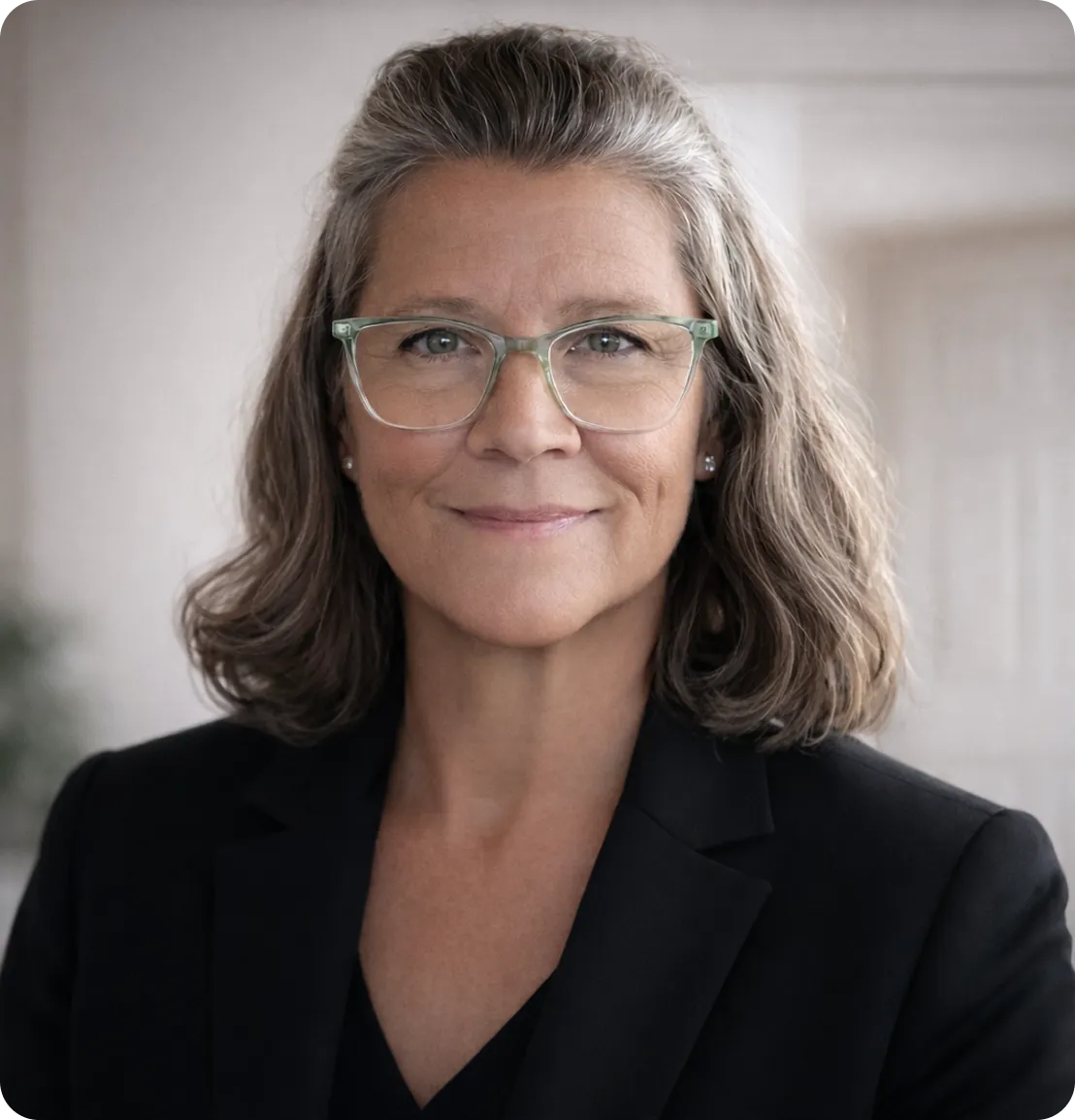
Dr. Tina Yerkes is a leadership consultant, keynote speaker, and author with 25+ years leading mission-driven organizations. A PhD scientist with executive training from Harvard and Kellogg, she has scaled nonprofits, secured seven-figure funding, and advised leaders across environmental conservation, public health, and social impact. Her work focuses on what it takes for women and mission-driven leaders to thrive — and on building the systems that hold them up.
Read Full StoryDrop your email and we'll send Chapter 1 plus the reading guide.
© 2026 TinaYerkes. All Rights Reserved.