Speaking & Consulting

Resources
 Buy the Book
Change has never been popular. Not once. Not ever.
And making friends is not on the top of my to-do list thisweek.
Every expansion of rights in human history got the same reaction. Sharp resistance. Hand wringing. Someone insisted that the current system was already fine, actually.
Workers who wanted a forty-hour week were told they were lazy. People who wanted to vote regardless of race were told the country was not ready. People who wanted clean water and safe factories were told the economy could not survive it.
Women have been here before. Four times before, actually.
The first wave, starting in the mid eighteen hundreds, fought for the vote. It took more than seventy years, and won in 1920, when society called the matter settled.
The second wave, through the nineteen sixties and seventies, ght for equal pay, reproductive rights, and a real place in the workforce. It won ground, and society called the matter settled again.
The third wave, starting in the early nineties, fought to be believed. It grew, in part, out of watching a woman testify in front of an all-male panel and get picked apart for it. It won more ground, and society moved on, assuming the work was finished.
The fourth wave, starting around 2012, fought through hashtags and headlines, forcing a reckoning with harassment that had been quietly tolerated for decades. It won more public attention than any wave before it.
Four waves. Four real wins. And the same resistance shows up every time, because the target kept shifting. First the vote. Then the paycheck. Then being believed. Then being heard. Each time, the ask changed. The resistance did not.
Here is what makes the next wave different. It is not asking to be let in the door, paid fairly once inside, believed when something happens, or heard when it does. It is asking to redesign the door itself. Not better treatment inside a system that was never built with women in mind. An actual rebuilt system.
That is a bigger ask than any of the four that came before it, which means the resistance to it will get louder, uglier, and stronger.
Here is what actually makes change so hard. It is not that people cannot see the evidence. It is that accepting the evidence requires giving something up.
If a system was never as meritocratic as it looked, the people who succeeded inside it have to sit with an uncomfortable question. Did I earn every bit of this, or did the system tilt the field for me too?
Most people will not sit with that question. They will defend the system instead, because defending it is easier than admitting the ground under them was never as solid as they thought. That is not an excuse. It is a choice, made over and over, by people who could choose differently.
So no, change was never supposed to be easy. It never has been, not once, in any of the four waves that came before this one.
And it does not get to stay easy on the people defending the current system just because discomfort is uncomfortable. It has to change anyway.
I’ve been thinking a lot lately about the F-word.
Feminism.
Why does one word produce such a visceral reaction?
Say feminist in a room and you can almost watch people sort themselves. Pride. Agreement. Discomfort. Eye rolls. Anger. Sometimes outright hostility.
So I started thinking about the word itself.
And it occurred to me: men don’t really have an equivalent.
Which made me wonder—are they mad because we have something they don’t?
Okay, probably not. But the reason there isn’t an equivalent word is actually pretty important.
Feminism names a movement and an ideology aimed at achieving social, political, and economic equality between the sexes. And historically, it arose because women did not have equal status.
Women needed a movement to fight for access to things men, as a class, already had: voting, property ownership, education, credit, professions, political power, control over their own money—and, at various points in our history, even basic legal autonomy.
There was no corresponding movement required for men to gain those rights.
And that makes feminist an unusually loaded word.
It is simultaneously a description, an identity, a political and social movement, a demand for equality—and, for some people, a provocation.
There really isn't a male equivalent carrying that same combination of identity + equality movement + emotional charge.
So why does feminism provoke such strong reactions?
Part of it is historical. Feminism challenged established distributions of power. Movements that challenge who gets access, authority and control rarely arrive without resistance.
Part of it is cultural. Decades of caricatures have turned feminist into shorthand for things feminism doesn't inherently mean: anti-man, angry, radical, humorless, victimhood, female superiority. Reject the label, and you can distance yourself from the caricature without ever engaging with the actual definition.
But I think there is something else going on.
Equality sounds benign in the abstract. Feminism asks what equality requires in practice.
And that's where things get uncomfortable.
Because if women were systematically excluded from power, then achieving equality isn't simply about welcoming women into the room now. It requires examining the rules, assumptions and systems that determined who got into the room in the first place.
That turns feminism from an abstract belief—of coursewomen should be equal—into a question:
What are you willing to change to make equality real?
Maybe that's why the F-word still has so much power.
It isn't just a word describing women.
It is a word that asks us to examine power.
Fifth Wave Feminists has now launched - A Movement is underway
Join 12,000+ readers receiving weekly insights on leadership, confidence, communication, and personal growth.


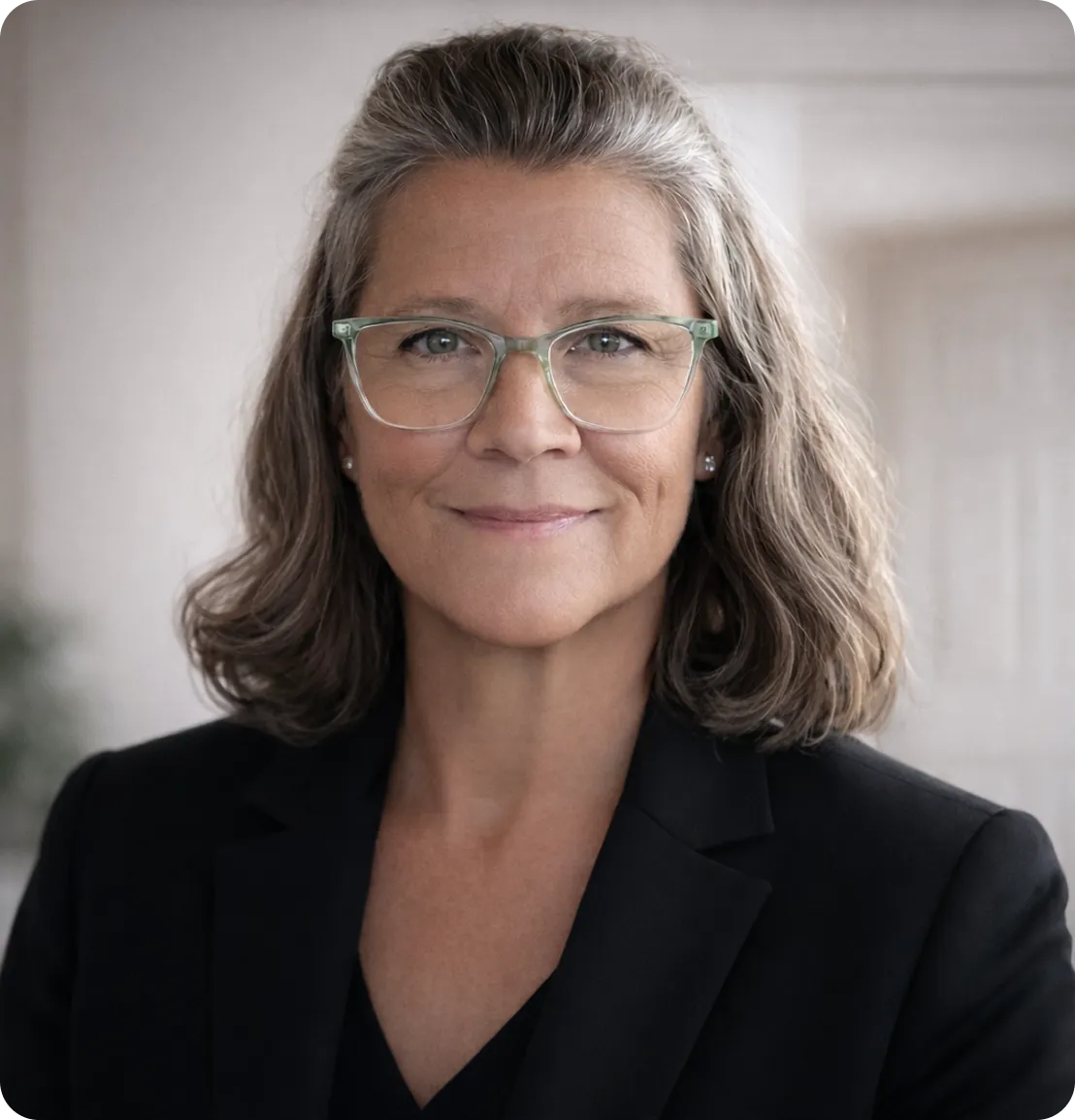
Dr. Tina Yerkes is a leadership consultant, keynote speaker, and author with 25+ years leading mission-driven organizations. A PhD scientist with executive training from Harvard and Kellogg, she has scaled nonprofits, secured seven-figure funding, and advised leaders across environmental conservation, public health, and social impact. Her work focuses on what it takes for women and mission-driven leaders to thrive — and on building the systems that hold them up.
Read Full StoryDrop your email and we'll send Chapter 1 plus the reading guide.
© 2026 TinaYerkes. All Rights Reserved.