Speaking & Consulting

Resources
 Buy the Book
The workplace is not broken. It is working exactly as it was designed to work, for exactly the body it was designed around. That body was never a woman’s. Start with the room itself.
Standard office temperature was set in 1960 using the resting metabolic rate of a forty-year-old, one hundred fifty-four-pound man. That formula still puts most offices at 71 to 72 degrees, the baseline developed by the American Society of Heating and Air Conditioning Engineers and still standard in most commercial buildings today. A 2015 study in Nature Climate Change, led by biologist Boris Kingma at Maastricht University, found that formula overestimates a woman’s actual resting metabolic rate by as much as 35 percent, and that women are actually most comfortable closer to 77 degrees, which means most offices run roughly five degrees too cold for the women sitting in them. Every woman with a sweater at her desk in July is compensating for a sixty-five-year-old miscalculation nobody has gone back to correct. That is the smallest of issues in workplace design, the bigger one is the workday itself.
The Fair Labor Standards Act of 1938 formalized the forty-hour week, eight hours a day, five days a week, after decades of labor organizing built around a specific worker: a man employed full time, married to a woman managing the home and children on no salary at all. The eight hours belonged to the job because the other sixteen belonged to someone else, unpaid. Women entered that same forty-hour structure decades later without the someone else, and every difficulty since has been framed as hers to solve. That same structure is being re-enforced right now. Job postings requiring fully in-office work jumped from 65 percent to 87 percent between the fourth quarter of 2025 and the second quarter of 2026, according to Robert Half, even as a University of Pittsburgh study of S&P 500 firms found return-to-office mandates followed stock declines and produced no measurable gain in firm value, and a randomized trial of 1,612 employees at Trip.com, published in Nature, found hybrid work had zero effect on performance or promotion while cutting resignations by a third. The office is being reinstated on faith, not results, the same way the schedule itself was never really about output. It was about who was available, and for how long.
Then the ladder. In academia, the tenure clock runs five to seven years from hire, and research from UC Berkeley’s Center on Health, Economic and Family Security puts the average age of a woman’s PhD at 34. That timeline lands the make-or-break years for promotion directly on top of the years most likely to include childbirth. The same Berkeley research found that women with children are twice as likely as men with children to end up in part-time or non-tenure-track positions, across every discipline studied. Law firms and consulting firms run the same structure under a different name, up-or-out timelines with no allowance for a body doing two things at once.
Then what gets called excellence. Legal scholar Joan Williams named it in her 1999 book Unbending Gender: the ideal worker, someone continuously available, never interrupted by caregiving, free to travel or relocate whenever the job asks. That description fits one specific man, the kind with someone else running his household, and it is still the standard most performance reviews are quietly measuring against, sixty years after Williams put a name on it. The cost of falling short of it is measurable. A longitudinal study of nearly 13,000 workers found that women who leave the workforce or cut their hours for family reasons earn 23.2 percent less for the rest of their careers, even after they return full time. Separate research on what researchers call the all-or-nothing workplace found that high-status professional women leave senior roles not because they cannot do the work, but because they cannot keep sustaining the appearance of constant availability the ideal worker standard demands. Staying costs her too. The national average for center-based infant care runs about $13,000 to $17,000 a year, and no state in the country meets the federal government’s own definition of affordable childcare, which caps it at 7 percent of family income. In 28 states, a year of infant care costs more than a year of public college tuition. So, the math never actually offers a woman a real choice. Leave, and she loses 23.2 percent of her earnings for the next thirty years. Stay, and she is handing over a full paycheck’s worth of income just to keep the job that was never built to make room for her in the first place.
Then what happens after hours. About 90 percent of Fortune 500 CEOs play golf, and 80 percent say it directly expanded their professional network. Only about 20 percent of golfers are women. A study out of the National University of Singapore Business School, analyzing more than 10,000 golfers and over 1,600 corporate directors, found that women who golf are 90 percent more likely to sit on a corporate board than women who do not play, and specifically 54 percent more likely than male golfers to land a board seat once they do, an advantage that climbs to 125 percent at the largest companies. The game is not incidental to the career. For women, it functions as one of the only entry points into rooms that are otherwise closed, and a round still runs four to five hours most working mothers do not have free to spend earning access that was never supposed to require a golf handicap in the first place. I hate golf – just for the record!
Then it stops being funny. The crash test dummy used in United States five-star safety testing, the Hybrid III, was developed in 1978 and modeled on a five-foot-nine, one-hundred-seventy-one-pound man. For decades, the only female dummy regulators required was a scaled-down copy of that same male body, tested almost exclusively in the passenger seat, rarely the driver’s seat. In the late 1990s, most automakers built whiplash-prevention seats using only male crash data. One of those designs cut whiplash injuries by up to 70 percent for men. Nobody tested it on a female body first, and real-world injury data later showed it did nothing measurable for women at all. Volvo was the exception. Working with Chalmers University, its engineers built a computer model of an average-sized female specifically to develop their whiplash system, and that system tested slightly more effective for women than for men. The lesson was available in the 1990s. Almost nobody used it. Government crash data now puts women at up to 73 percent higher risk of serious injury and 17 percent higher risk of death in a comparable frontal crash. The Department of Transportation unveiled the first advanced female-specific dummy, the THOR-05F, in November of 2025, built from actual female body data. It is still not in use. As of August 2026, it has not been standardized, has not been written into federal regulation, and is not expected to be required in official crash testing until 2027 or 2028, fifty years after the male dummy became the standard everyone has been tested against since, although it may show up in voluntary test car ratings this year. Every car sold in this country today is still rated safe using a body that was never hers.
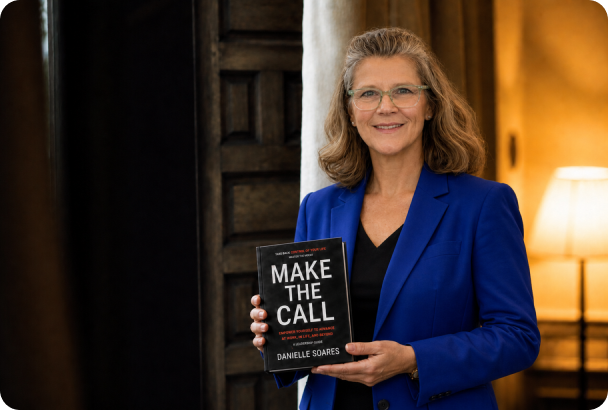
The thermostat, the workday, the crash test dummy, these are design specs, written decades apart, by people solving for one kind of body and calling the result universal. That is the entire argument of the book: the room needs a redesign, not the woman standing in it.
Join 12,000+ readers receiving weekly insights on leadership, confidence, communication, and personal growth.


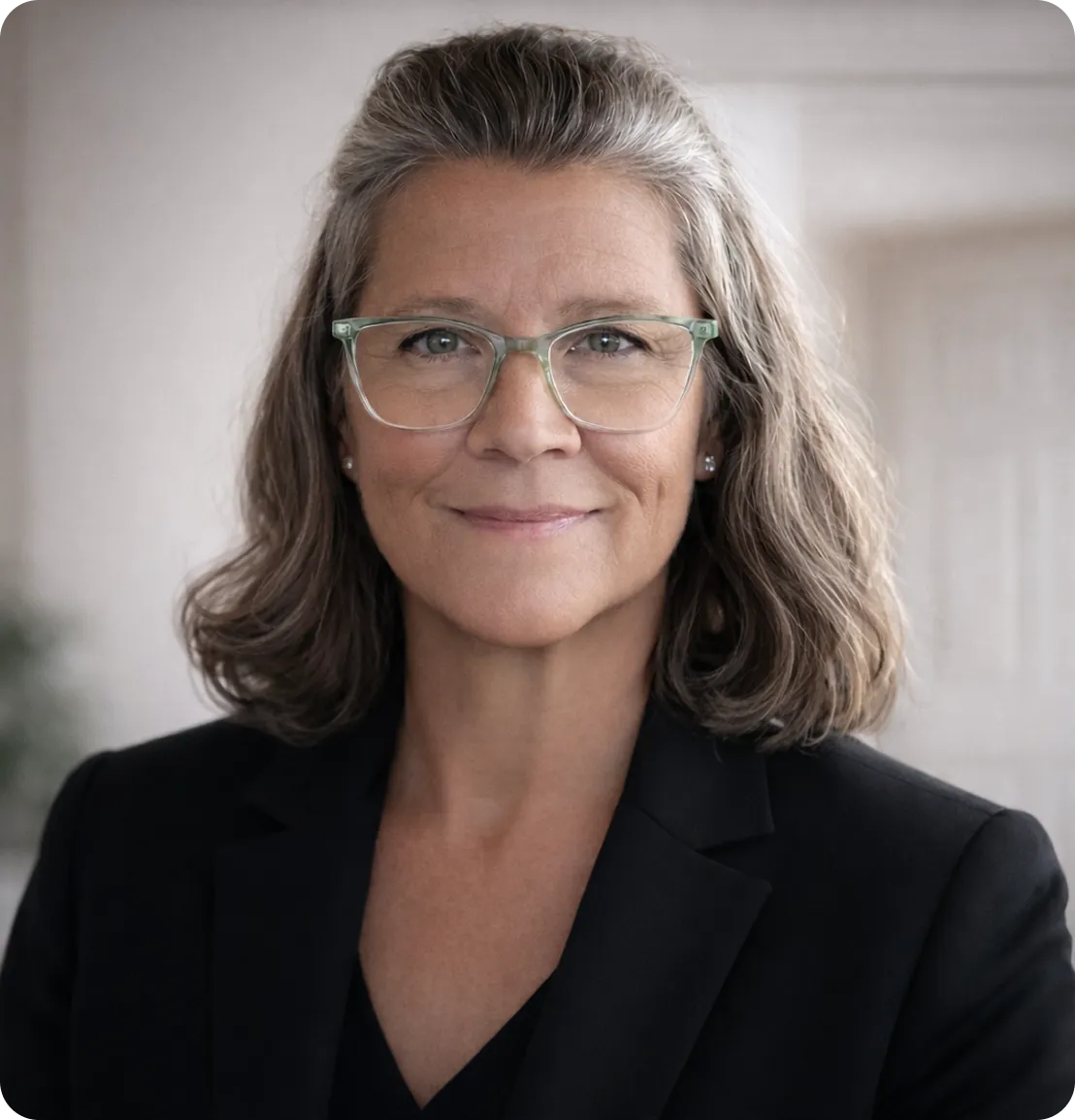
Dr. Tina Yerkes is a leadership consultant, keynote speaker, and author with 25+ years leading mission-driven organizations. A PhD scientist with executive training from Harvard and Kellogg, she has scaled nonprofits, secured seven-figure funding, and advised leaders across environmental conservation, public health, and social impact. Her work focuses on what it takes for women and mission-driven leaders to thrive — and on building the systems that hold them up.
Read Full StoryDrop your email and we'll send Chapter 1 plus the reading guide.
© 2026 TinaYerkes. All Rights Reserved.